







Key takeaways
- Real output is usually well below the rated wattage.
- Angle the panel towards the sun and readjust every hour or so.
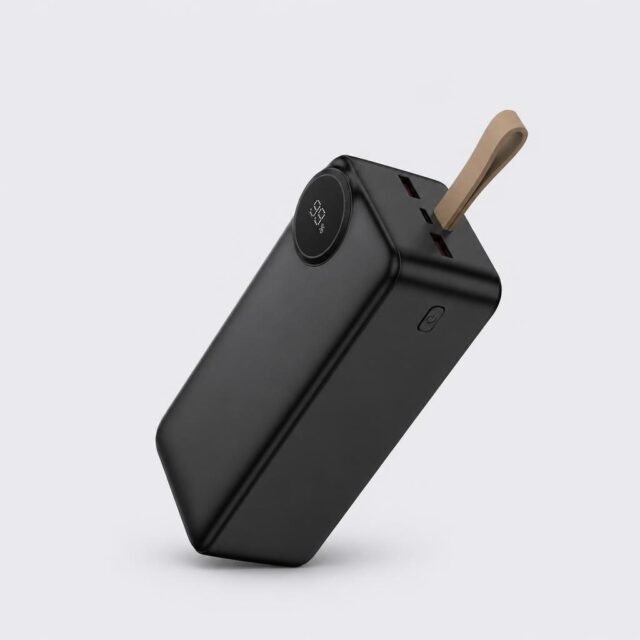
- Charge a power bank during the day, then the phone from it.
- High heat reduces panel efficiency; airflow helps.
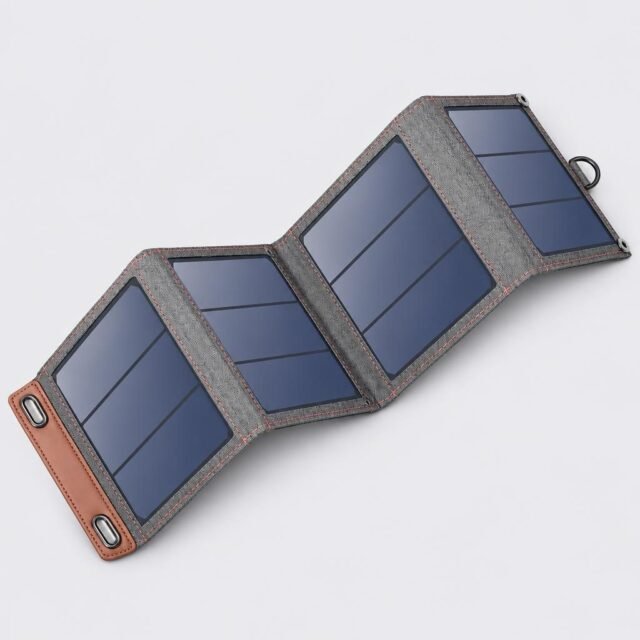
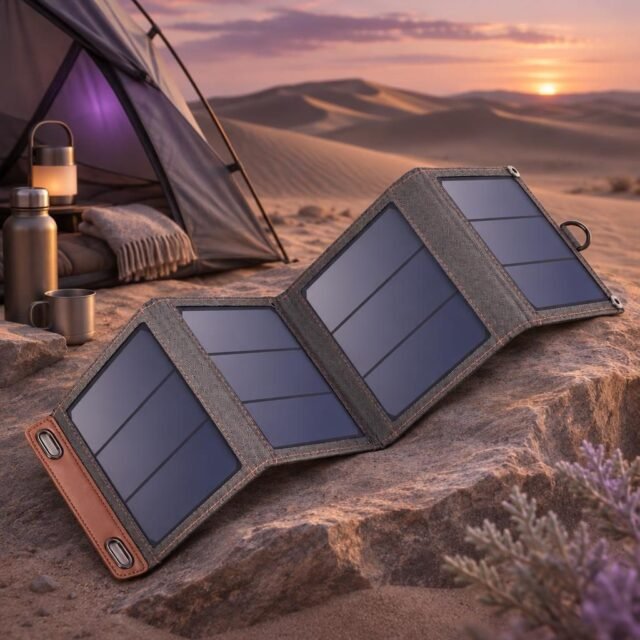
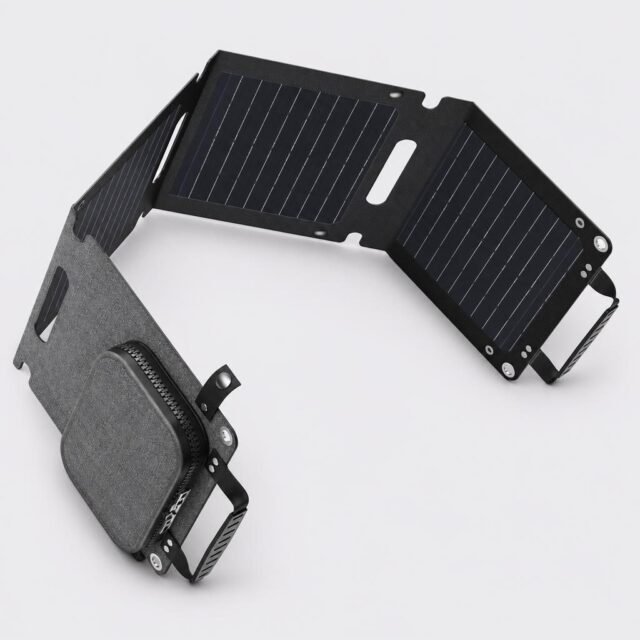
Quick answer: a 14W panel trickle-charges a phone, 28W charges phones and power banks well, and 40W or more suits power stations and tablets. Expect lower output than the label in real conditions, and charge a power bank first for steadier results.
Rated vs real output
Panel ratings are measured in ideal lab conditions. Outdoors, sun angle, haze, dust and heat lower output.
Getting the best results
- Face the panel directly at the sun.
- Keep panels clean of dust and sand.
- Let air flow behind the panel.
- Charge a power bank, not the phone directly, to avoid stop-start charging when clouds pass.
Which size?
Hikers: 14W. Campers charging phones and power banks: 28W. Pairing with a power station: 40W or more.
Frequently asked questions
Can a solar charger charge my phone directly?
Yes, but output drops when light changes. Charging a power bank first is more reliable.
Does heat affect solar panels?
Yes, efficiency drops as panels heat up.
Are solar chargers waterproof?
Many are water resistant, but keep connections dry.
Not sure what fits your device?
Ask the Gaatly Concierge or message our team. We reply in minutes.