









Key takeaways
- Safe chargers include over-voltage, over-current, short-circuit and over-temperature protection.
- Look for recognised certification marks and a named, reachable brand.
- Warning signs: unusually light weight, no specs on the label, buzzing, heat or a burning smell.
- A good charger protects your phone battery and your home.
Quick answer: very cheap chargers often skip the insulation and protection circuits that stop overheating and power surges. Choose chargers from accountable brands, with clear ratings on the label, recognised certification marks and published protections.
What can go wrong
A charger converts mains electricity to low voltage. Poor isolation between the two sides can expose devices or people to dangerous voltage. Missing temperature control can let parts overheat. Unstable output can stress the battery in your phone.
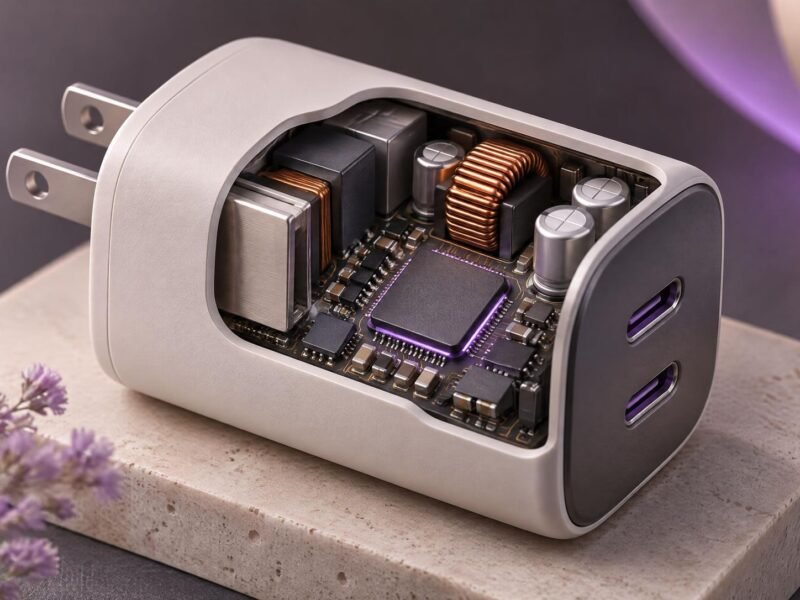
Protections a good charger has
- Over-voltage and over-current protection
- Short-circuit protection
- Over-temperature monitoring that reduces output when hot
- Proper creepage distances and isolation
- Flame retardant housing
Warning signs
- No manufacturer name or input and output ratings
- Very light weight for the claimed wattage
- Loose fit in the socket, buzzing, crackling or discolouration
If a charger smells, sparks or gets too hot to touch, unplug it immediately and stop using it.
Every Gaatly charger comes with a 2-year warranty and is distributed in the UAE by Old Port Solutions LLC. Browse wall chargers.
Frequently asked questions
Can a cheap charger damage my phone?
It can. Unstable voltage or poor protection can stress the battery and charging circuits.
Is it normal for a charger to get warm?
Warm is normal under load. Too hot to hold comfortably is not; unplug it.
Are GaN chargers safer?
GaN chargers are more efficient and run cooler, but safety still depends on design quality and protections.
Ask the Gaatly Concierge or message our team. We reply in minutes.