









Key takeaways
- An e-marker is a small chip in the cable connector that reports the cable's capabilities.
- Without one, chargers limit current to 3A (60W at 20V).
- All 5A (100W and 240W) cables and most high speed data cables include an e-marker.
- The e-marker is a safety feature, not a gimmick.
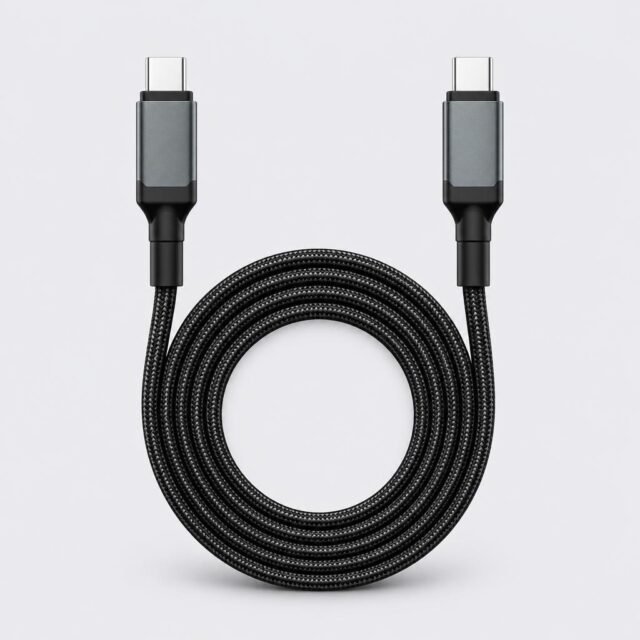
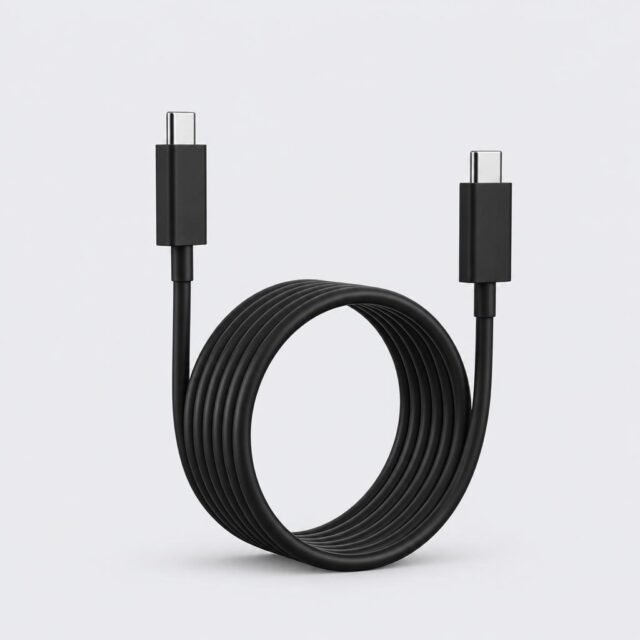
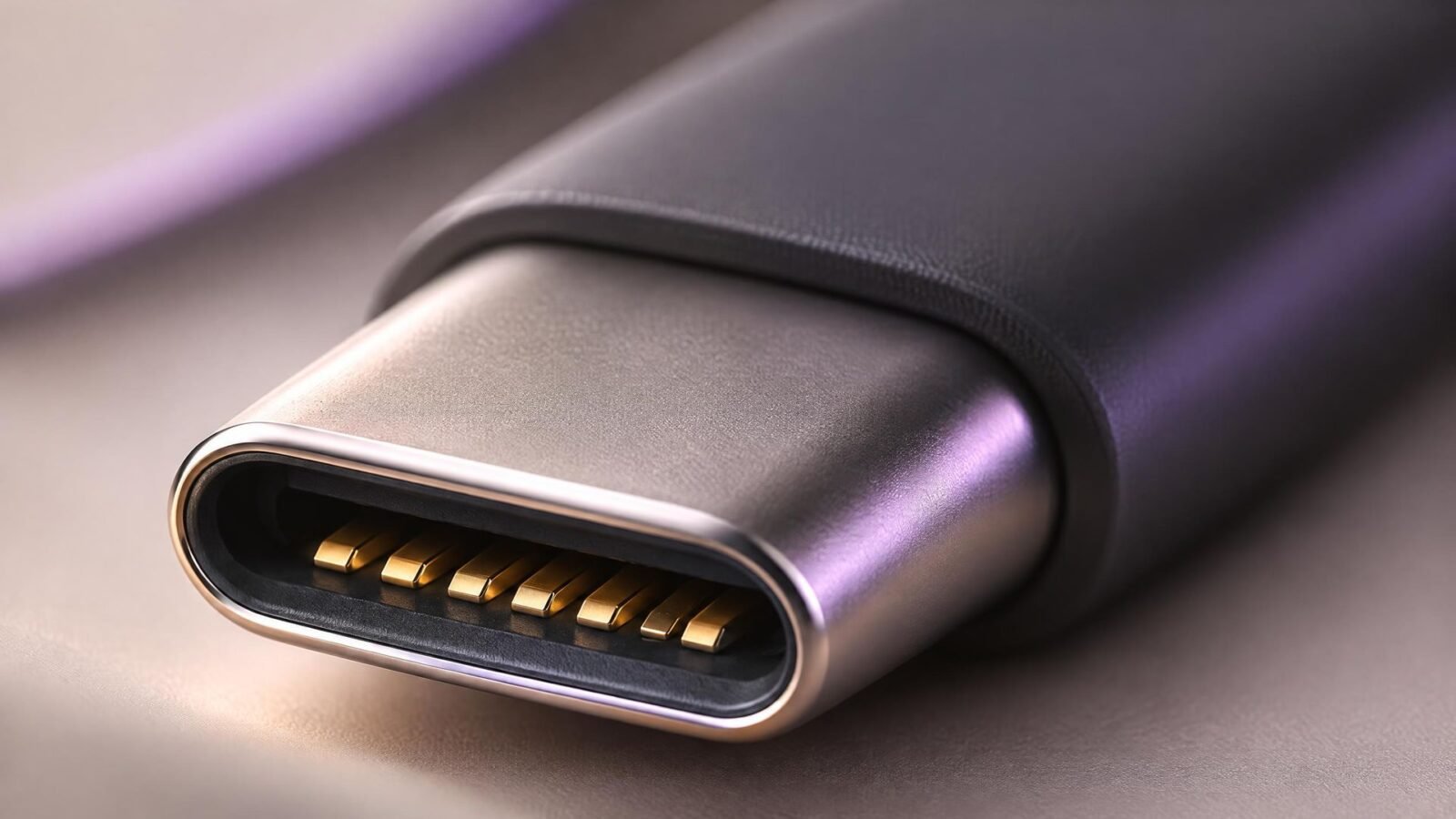
Quick answer: an e-marker (electronically marked cable) is a chip inside a USB-C plug that tells the charger and device what the cable supports: current, voltage, data speed and more. Chargers only send more than 3A when they detect a 5A e-marker.
Why it exists
Pushing 5A through a cable not designed for it could overheat the wires. USB Power Delivery solves this by asking the cable. If no e-marker answers, the system assumes a basic 3A cable and caps power at 60W.
What it reports
- Maximum current: 3A or 5A
- Maximum voltage: 20V, or 50V for EPR (240W) cables
- Supported data speeds
- Cable length and type
Which cables need one?
Any cable rated 100W or 240W, and most full-featured USB 3.x, USB4 and Thunderbolt cables. Simple 60W charging cables do not need one.
See our 240W explainer and shop e-marked cables.
Standards and sources
Frequently asked questions
How do I know if my cable has an e-marker?
Check the rating: a 100W or 240W cable must include one. Some USB-C power meters can read it.
Does an e-marker affect phone charging?
No. Phones typically draw under 3A, so they charge normally on any good cable.
Can an e-marker fail?
Rarely. If a 240W cable suddenly limits laptops to 60W, the chip or cable may be damaged.
Ask the Gaatly Concierge or message our team. We reply in minutes.